Growth strategy · Updated September 17, 2026 · 6 min read
Best time to post on Instagram in 2026: studies vs. your own data
The two biggest 2026 posting-time studies disagree with each other — and that disagreement is the most useful fact in this guide. Platform-wide averages describe other people's followers. Here is what the large datasets actually found, why they conflict, and how to read the timing data that matters: your own.
What the 2026 studies actually found
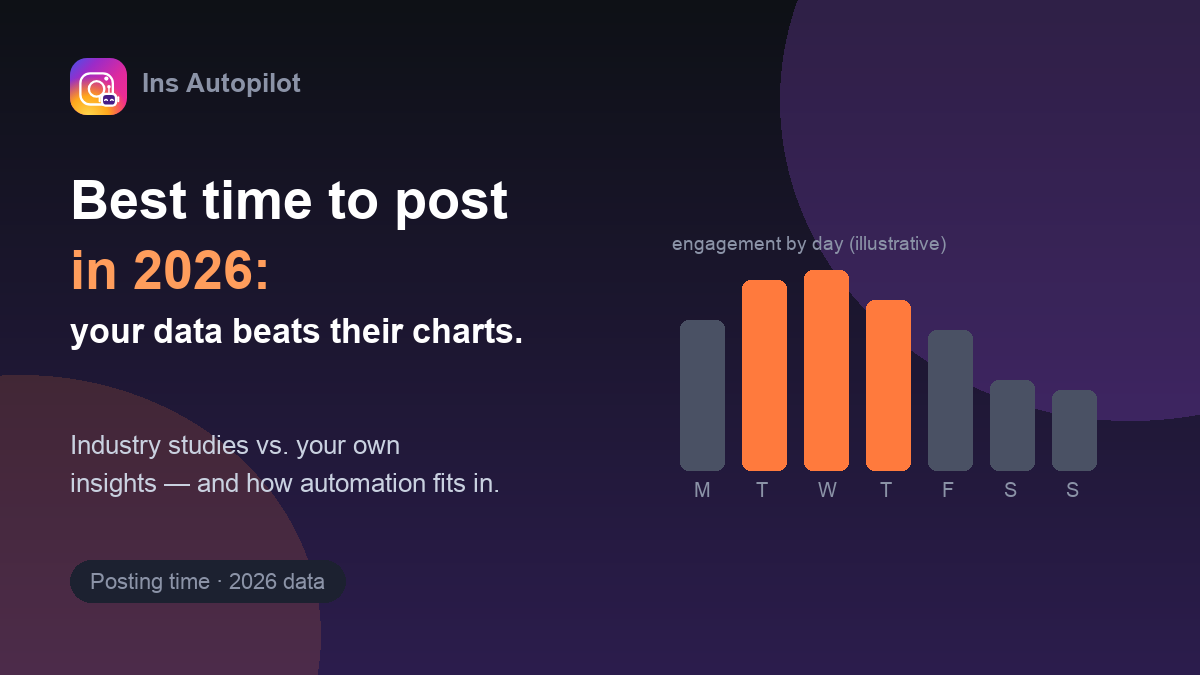
Two datasets dominate search results for this question, and they use different methods — Sprout Social 2026 and Buffer 9.6M-post analysis:
| Study | Data basis | Headline finding |
|---|---|---|
| Sprout Social 2026 (sproutsocial.com — analysis of 30,000+ customer accounts, Nov 2025–Feb 2026) | Aggregated engagement across managed brand accounts | Peak windows around midday-to-afternoon on weekdays; weekends and early mornings generally weaker |
| Buffer 2026 (buffer.com — 9.6 million posts, described as the largest single-source study of the year) | Engagement per post across individual creator and brand accounts | Top individual slots reported around Thursday morning and Wednesday midday/evening |
Both figures are as published by each vendor; we have not independently reproduced either dataset. Treat both as directional, not gospel.
Why the averages mislead
- Different populations. Sprout's set skews toward managed brand accounts; Buffer's includes many solo creators. Their audiences are active at different hours.
- Different success metrics. "Engagement" can mean likes, comments, saves, or watch time. Each metric peaks at a different time of day.
- Averages hide your niche. A fitness audience, a B2B audience and a parenting audience have almost opposite daily rhythms.
- The feed is not strictly chronological. Instagram's ranking system decides what is "top" for each viewer. Timing is one input among many — a good post can surface hours after publishing.
How to find your own best time (30 minutes, once a quarter)
- Open Professional Dashboard → insights and note when your followers are most active, by day and hour.
- Look at your last 20–30 posts. Note publish time vs. first-2-hours engagement. Patterns in your data beat any chart from a blog.
- Pick two candidate windows and A/B them across your next 6–10 posts before concluding anything.
- Re-check quarterly. Audience activity drifts as your follower mix changes.
Native insights come from Instagram itself and are the authoritative source for your account. Third-party timing charts, including ours in summary form here, are context — not instructions.
“To view audience demographics, you'll need to use preset timeframes, and reach or engage over 100 viewers.”
Instagram Help Center, View account and content insights on Instagram
Where automation fits in
Timing is about when your content lands; automation tools like Ins Autopilot are about when your engagement actions run. The same principle applies to both: consistent, human-paced activity beats bursts. Scheduling your publishing around your audience's active windows while keeping engagement actions paced through the day is a reasonable combination — but no scheduler makes weak content perform, and no posting time compensates for actions that look like a bot.
“This includes creating accounts or accessing or collecting information in an automated way without our express permission, regardless of whether such automated access or collection is undertaken while logged-in to an Instagram account.”
Instagram Help Center, Terms of Use